Received the following collection of links which merits posting: a broad selection of resources showing the humanitarian and civic action projects being undertaken in Afghanistan by US forces. Might be useful to those of you engaged in the endless debate around Afghanistan, civ-mil debates, involvement of armed forces in humanitarian action, etc.
On the Ground: U.S. Troops, Civilians Bring Goodwill to Afghanistan
http://www.defenselink.mil/news/newsarticle.aspx?id=52841
Team Helps to Fight Polio in Konar Province
http://www.defenselink.mil/news/newsarticle.aspx?id=52820
U.S. Soldiers Bridge Access for Remote Afghans
http://www.defenselink.mil/news/newsarticle.aspx?id=52809
Team Improves Future Prospects for Afghan Village
http://www.defenselink.mil/news/newsarticle.aspx?id=52742
School Project Brings Hope to Afghan Province
http://www.defenselink.mil/news/newsarticle.aspx?id=52689
Team Holds Weekly Shoe Drive for Afghan Children
http://www.defenselink.mil/news/newsarticle.aspx?id=52668
Command Provides Ambulances for Afghan Police Medics
http://www.defenselink.mil/news/newsarticle.aspx?id=52662
Afghan, Coalition Leaders Unveil Bridge With Hopes of Prosperity
http://www.defenselink.mil/news/newsarticle.aspx?id=52534
Hope is Victory in Afghanistan, PRT Commander Says
http://www.defenselink.mil/news/newsarticle.aspx?id=53259
New Roads to Open Up Eastern Afghanistan Province
http://www.defenselink.mil/news/newsarticle.aspx?id=53258
Security Forces Provide Safety Net for Reconstruction Mission
http://www.defenselink.mil/news/newsarticle.aspx?id=53234
On the Ground: U.S. Forces Help Afghans Combat Winter Weather
http://www.defenselink.mil/news/newsarticle.aspx?id=53218
On the Ground: Industry Day, Power Plant Project Attract Afghan Contractors
http://www.defenselink.mil/news/newsarticle.aspx?id=53169
Team in Afghanistan Looks to Double Health Care Access
http://www.defenselink.mil/news/newsarticle.aspx?id=53155
Program Builds Better Health Care System in Afghanistan
http://www.defenselink.mil/news/newsarticle.aspx?id=53152
Paktia Provincial Reconstruction Team Reaches Out to Remote Village
http://www.defenselink.mil/news/newsarticle.aspx?id=53107
On the Ground: Americans Help Burned Girl, Train Afghans
http://www.defenselink.mil/news/newsarticle.aspx?id=53099
Projects Prove Difficult, But Key to Rebuilding Efforts
http://www.defenselink.mil/news/newsarticle.aspx?id=53072
Agribusiness Teams Plant Seeds for Economic Growth in Afghanistan
http://www.defenselink.mil/news/newsarticle.aspx?id=53065
Reconstruction Team Serves on Front Line of War on Terror
http://www.defenselink.mil/news/newsarticle.aspx?id=53029
Clinic Gives ‘Hope’ to Afghan Village
http://www.defenselink.mil/news/newsarticle.aspx?id=53025
On the Ground: Coalition, Afghan Troops Give Fuel, Food, Collect Munitions
http://www.defenselink.mil/news/newsarticle.aspx?id=52956
New Bridge Brings Hope, Safety to Afghanistan’s Panjshir Valley
http://www.defenselink.mil/news/newsarticle.aspx?id=52920
Empowerment Program Helps to Educate Afghans
http://www.defenselink.mil/news/newsarticle.aspx?id=53712
On the Ground: Troops Provide Medical Care, Necessities to Afghans
http://www.defenselink.mil/news/newsarticle.aspx?id=53705
New Afghan Program Supports Community-based Approach to Security
http://www.defenselink.mil/news/newsarticle.aspx?id=53686
Coalition Mentors Afghan Army, Police on Jurisprudence
http://www.defenselink.mil/news/newsarticle.aspx?id=53661
Special Operations Troops Deliver Smiles to Bagram Children
http://www.defenselink.mil/news/newsarticle.aspx?id=53569
On the Ground: Troops Aid Afghans With Security, Supplies
http://www.defenselink.mil/news/newsarticle.aspx?id=53520
U.S. Team Helps to Plant Seeds for Afghan Farmers’ Success
http://www.defenselink.mil/news/newsarticle.aspx?id=53457
Afghan Women Celebrate Culture, Achievements at Women’s Day Event
http://www.defenselink.mil/news/newsarticle.aspx?id=53455
Resource Center to Provide Training, Education for Afghan Women
http://www.defenselink.mil/news/newsarticle.aspx?id=53426
Afghan Soldiers Train to Save Lives
http://www.defenselink.mil/news/newsarticle.aspx?id=53394
Afghanistan Fight Turns to Economy, Governance
http://www.defenselink.mil/news/newsarticle.aspx?id=53369
Coalition, Afghans Find Goodwill at Traditional Afghan Games
http://www.defenselink.mil/news/newsarticle.aspx?id=53309
Team Provides Medical Care to Afghan Students, Villagers
http://www.defenselink.mil/news/newsarticle.aspx?id=53304
Coalition Troops Care for Afghan People
http://www.defenselink.mil/news/newsarticle.aspx?id=53282
Human Terrain Teams Build Friendships, Future
http://www.defenselink.mil/news/newsarticle.aspx?id=53281
Soldiers Bring Light to Afghan Marketplace
http://www.defenselink.mil/news/newsarticle.aspx?id=54098
Troops Give Afghan Baby Second Chance at Life
http://www.defenselink.mil/news/newsarticle.aspx?id=54063
Afghans Bid on Brighter Future
http://www.defenselink.mil/news/newsarticle.aspx?id=54041
Afghan Women Find Support in Wardak Province
http://www.defenselink.mil/news/newsarticle.aspx?id=54010
Reconstruction Team Completes Afghanistan Canal Project
http://www.defenselink.mil/news/newsarticle.aspx?id=53992
International Effort Benefits Afghanistan’s Alasay Valley
http://www.defenselink.mil/news/newsarticle.aspx?id=53978
On the Ground: Coalition Medics Treat Afghan Troops, Civilians, Prevent Diseases
http://www.defenselink.mil/news/newsarticle.aspx?id=53945
U.S., French, Afghan Forces Team Up to Aid Afghan Villages
http://www.defenselink.mil/news/newsarticle.aspx?id=53925
Route-clearance Team Clears Way to Commerce in Afghan Province
http://www.defenselink.mil/news/newsarticle.aspx?id=53903
Team Opens Six New Schools for Afghan Children
http://www.defenselink.mil/news/newsarticle.aspx?id=53885
Medics Turn Aid Station Into Afghan Emergency Room
http://www.defenselink.mil/news/newsarticle.aspx?id=53883
Afghan Girl Gets Help from Soldiers, Americans
http://www.defenselink.mil/news/newsarticle.aspx?id=53855
Team Fosters Self-Sufficiency in Afghanistan
http://www.defenselink.mil/news/newsarticle.aspx?id=53802
Civil Affairs Team Brings Change to Afghan Province
http://www.defenselink.mil/news/newsarticle.aspx?id=54441
Rural Village Sees Brighter Future With Coalition’s Help
http://www.defenselink.mil/news/newsarticle.aspx?id=54371
Health, Security Officials Look to Improve Afghan Health System
http://www.defenselink.mil/news/newsarticle.aspx?id=54353
Coalition Team Gives Temporary Shelter to Afghan Students
http://www.defenselink.mil/news/newsarticle.aspx?id=54276
Doctor Confronts Maternal Mortality in Afghanistan
http://www.defenselink.mil/news/newsarticle.aspx?id=54263
Kansas Agribusiness Development Team Arrives in Afghanistan
http://www.defenselink.mil/news/newsarticle.aspx?id=54254
Afghan, Coalition Medics Help People of Herat District
http://www.defenselink.mil/news/newsarticle.aspx?id=54188
Special Operations Forces Save Lives After Bomb Attack
http://www.defenselink.mil/news/newsarticle.aspx?id=54286
Showing posts with label CIMIC. Show all posts
Showing posts with label CIMIC. Show all posts
Wednesday, June 24, 2009
Monday, September 24, 2007
Fight Less, Win More - the Afghanistan Counterinsurgency Academy
An interesting Washington Post article written by an instructor at the Afghanistan Counterinsurgency Academy.
'The grandly misnamed "academy" is a tiny collection of huts and tents on Kabul's dusty southern outskirts. Since May, motley classes of several dozen Afghan army officers, Afghan policemen, NATO officers, American officers and civilians have been learning and living side by side there for a week at a time.
The academy does much more than teach the theory and tactics of fighting the Taliban insurgents who are trying to unseat President Hamid Karzai and claw their way back to power. It is also a rare forum for military officers, civilian aid workers, academics and diplomats -- from Afghanistan and all 37 countries in NATO's International Security Assistance Force -- to unite in trying to bring good governance, prosperity and security to Afghanistan. The curriculum is based on the Army and Marine Corps' new counterinsurgency doctrine, released in December. Classes revolve around four so-called paradoxes of counterinsurgency. Unless we learn all four well, we'll continue to win battles in Afghanistan while losing the war.'
The theory sounds great, shame there isn't more online about this 'academy'. Where does one sign up for this week-long love-in of soldiers, aid workers and others??
'The grandly misnamed "academy" is a tiny collection of huts and tents on Kabul's dusty southern outskirts. Since May, motley classes of several dozen Afghan army officers, Afghan policemen, NATO officers, American officers and civilians have been learning and living side by side there for a week at a time.
The academy does much more than teach the theory and tactics of fighting the Taliban insurgents who are trying to unseat President Hamid Karzai and claw their way back to power. It is also a rare forum for military officers, civilian aid workers, academics and diplomats -- from Afghanistan and all 37 countries in NATO's International Security Assistance Force -- to unite in trying to bring good governance, prosperity and security to Afghanistan. The curriculum is based on the Army and Marine Corps' new counterinsurgency doctrine, released in December. Classes revolve around four so-called paradoxes of counterinsurgency. Unless we learn all four well, we'll continue to win battles in Afghanistan while losing the war.'
The theory sounds great, shame there isn't more online about this 'academy'. Where does one sign up for this week-long love-in of soldiers, aid workers and others??


Standoff with Taliban leaves big Afghan dam project in limbo - International Herald Tribune
IHT has a great article on the seemingly desperate efforts to bring stability to Helmand Province via reconstruction projects. The cycle seems like that experienced in Iraq: initial attempts were made with a variety of largely private sector actors; insurgents/rebels starting direct attacks on the projects; civilian operators fled, and now a militarized USAID project does all it can to try and rebuild under fire.


Sunday, August 19, 2007
East African and Southern African Nations Creating Regional Peacekeeping Force
Voice of America has a piece introducing the new Eastern African Standby Brigade (EASBRIG).
'Kenyan President Mwai Kibaki opened the defense ministers' council meeting in Nairobi with a call for financial support and troop contributions to a new stand-by force. Mr. Kibaki said that troops should be available within three years to handle any crisis, from terrorist attacks to natural disasters, on the African continent.
The new force, to be called the Eastern Africa Standby Brigade (EASBRIG) has its headquarters in Ethiopia's capital, Addis Ababa, as well as a planning department in Kenya. Though exact numbers of soldiers have yet to be announced, military officials have said EASBRIG will be made up of five brigades.
Officials of the Inter-Governmental Authority on Development (IGAD), a seven-country regional development organization in East Africa, say the new force is needed, because they are overwhelmed with demands for troops to be sent to war-torn areas on the continent, including Sudan's Darfur region, Somalia and Democratic Republic of Congo.'
In a case of duelling-launches, the SADC announced the creation of their own Southern African peacekeeping brigade on the same day.
'Kenyan President Mwai Kibaki opened the defense ministers' council meeting in Nairobi with a call for financial support and troop contributions to a new stand-by force. Mr. Kibaki said that troops should be available within three years to handle any crisis, from terrorist attacks to natural disasters, on the African continent.
The new force, to be called the Eastern Africa Standby Brigade (EASBRIG) has its headquarters in Ethiopia's capital, Addis Ababa, as well as a planning department in Kenya. Though exact numbers of soldiers have yet to be announced, military officials have said EASBRIG will be made up of five brigades.
Officials of the Inter-Governmental Authority on Development (IGAD), a seven-country regional development organization in East Africa, say the new force is needed, because they are overwhelmed with demands for troops to be sent to war-torn areas on the continent, including Sudan's Darfur region, Somalia and Democratic Republic of Congo.'
In a case of duelling-launches, the SADC announced the creation of their own Southern African peacekeeping brigade on the same day.
More YouTube- Australian PRTs in Afghanistan
Two personal interest pieces on YouTube, showcasing Australian PRT successes in Afghanistan:
Thanks to Warisboring for the links.
Thanks to Warisboring for the links.
Thursday, August 09, 2007
Afghanistan- NGOs question new government directive on armed escorts IRIN Asia | Asia | Afghanistan | AFGHANISTAN: NGOs question new government directive on armed escorts | Governance Conflict Aid Policy | News Item
'Afghanistan’s Ministry of Interior has ordered Afghan security forces not to allow foreign aid workers to travel outside Kabul without an armed escort.'
In the aftermath of the ongoing hostage crises in Afghanistan, the move was probably inevitable, as are the reactions by NGOs:
'...The Afghan security authorities have repeatedly requested all foreign aid workers to seek their advice before travelling beyond Kabul city.
“We would not be facing the current crisis if the Koreans had informed us about their travel plans in advance,” said Zemarai Bashari, a spokesman for the Interior Ministry (MoI). “We could have provided them with an armed escort for their protection,” he added.
The government of Afghanistan has expressed it readiness to provide armed police escorts for international staff who would like to drive out of the capital, officials said.
However, representatives of local and international NGOs have dubbed the government’s extra security measures “disproportionate” and “counterproductive”.
“Armed escorts will undoubtedly make NGOs a legitimate target for anti-government elements,” said Hashim Mayar, deputy director of ACBAR - a coordination umbrella for NGOs in Afghanistan.
Mayar also said that in light of criticisms of widespread corruption and inefficiency within the MoI, many NGOs fear disclosing an advanced itinerary to the Afghan police, fearing it would increase possible risks.
Matt Waldman, an adviser to the UK charity Oxfam, said: “Whilst we understand the reasons for this move, we believe it is disproportionate and could have adverse consequences for development works, particularly in rural areas.”'
Disproportionate does seem to characterize many aspects of this story. In particular, how many agencies were truly working far outside the relative safety of Kabul (or other urban centres...) and as such would truly be affected by this travel restriction- if we can even call it that- ?
In the aftermath of the ongoing hostage crises in Afghanistan, the move was probably inevitable, as are the reactions by NGOs:
'...The Afghan security authorities have repeatedly requested all foreign aid workers to seek their advice before travelling beyond Kabul city.
“We would not be facing the current crisis if the Koreans had informed us about their travel plans in advance,” said Zemarai Bashari, a spokesman for the Interior Ministry (MoI). “We could have provided them with an armed escort for their protection,” he added.
The government of Afghanistan has expressed it readiness to provide armed police escorts for international staff who would like to drive out of the capital, officials said.
However, representatives of local and international NGOs have dubbed the government’s extra security measures “disproportionate” and “counterproductive”.
“Armed escorts will undoubtedly make NGOs a legitimate target for anti-government elements,” said Hashim Mayar, deputy director of ACBAR - a coordination umbrella for NGOs in Afghanistan.
Mayar also said that in light of criticisms of widespread corruption and inefficiency within the MoI, many NGOs fear disclosing an advanced itinerary to the Afghan police, fearing it would increase possible risks.
Matt Waldman, an adviser to the UK charity Oxfam, said: “Whilst we understand the reasons for this move, we believe it is disproportionate and could have adverse consequences for development works, particularly in rural areas.”'
Disproportionate does seem to characterize many aspects of this story. In particular, how many agencies were truly working far outside the relative safety of Kabul (or other urban centres...) and as such would truly be affected by this travel restriction- if we can even call it that- ?
Wednesday, August 08, 2007
Afghanistan- Servicemembers Volunteer to Convoy Supplies to Needy Afghans
'Every other week, servicemembers from all branches of the military conduct convoys from this base to deliver clothing and supplies to needy Afghans in the surrounding areas. But they're not doing it because they have to. They're doing it because they want to help.
Members of the Combined Security Transition Command Afghanistan unload a truck full of donations from the U.S. at a refugee camp outside of Kabul, Afghanistan. Photo by Air Force Master Sgt. Jim Varhegyi
(Click photo for screen-resolution image);high-resolution image available.
“These are military and coalition members who volunteer,” said Air Force Lt. Col. Michael Weber, Camp Eggers garrison chaplain. “They participate on their own time and at their own risk to do something good for the people of Afghanistan.”
The chaplains on Camp Eggers have organized the deliveries as part of a community relations program. Working with local religious leaders, as well as various government and relief agencies, the program organizers plan their missions to deliver aid to areas most in need of the assistance.'
Members of the Combined Security Transition Command Afghanistan unload a truck full of donations from the U.S. at a refugee camp outside of Kabul, Afghanistan. Photo by Air Force Master Sgt. Jim Varhegyi
(Click photo for screen-resolution image);high-resolution image available.
“These are military and coalition members who volunteer,” said Air Force Lt. Col. Michael Weber, Camp Eggers garrison chaplain. “They participate on their own time and at their own risk to do something good for the people of Afghanistan.”
The chaplains on Camp Eggers have organized the deliveries as part of a community relations program. Working with local religious leaders, as well as various government and relief agencies, the program organizers plan their missions to deliver aid to areas most in need of the assistance.'
US Civil Affairs- Peace Through Puppets
One article lead us to dig deeper into this phenomenon: Peace Through Puppets.
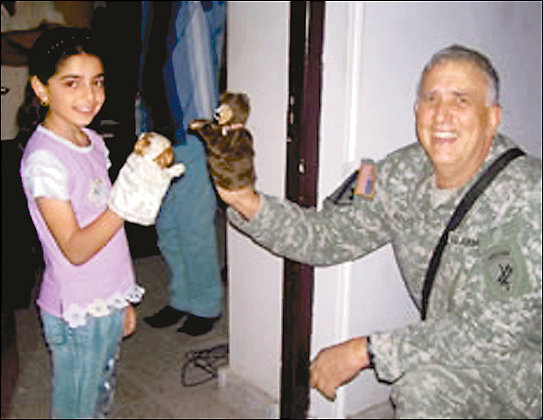
'The reaction was immediate when Army 1st Sgt. Bruce L. Reges strode into the classroom in the Baghdad suburb of Baqubah, in the volatile Diyala province.
At 6-foot-5 and wearing full body armor, Reges, 57, looked fearsome to the schoolchildren. Outside, two Stryker armored vehicles blocked the street. A heavily armed security detail was checking out the roof and other classrooms.
Reges is assigned to an Army civil affairs unit out of Fort Bragg, N.C., working to reconstruct and support schools, irrigation projects and honey farms in Diyala. The team was visiting the school to assess what could be done to help, but the young students were terrified.
"Two of the girls started to cry and escape somehow, and the teacher had to calm them down and tell them that we were there to help them, not to hurt them," Reges recalled. "It was emotionally tough for me to see a child so traumatized by U.S. soldiers that they reacted that way."'
You can guess at the rest of the article- an email to his mom, the inevitable shipment of handpuppets assembled by concerned mothers in Reston, Louisiana and now Civl Affairs soldiers in Afghanistan and Iraq are not to be found without a 'puppet in their pocket', so to speak. As with the best things in life, you can donoate money via PayPal on the website (20 USD = 12 soft puppets), in addition to enjoying photos of thoroughly softened US troops in body armor, wrap-around sunglasses and hand puppets... Other armed forces can seemingly request their own puppets with a simple mail to peacethrupuppets@aol.com.
'The reaction was immediate when Army 1st Sgt. Bruce L. Reges strode into the classroom in the Baghdad suburb of Baqubah, in the volatile Diyala province.
At 6-foot-5 and wearing full body armor, Reges, 57, looked fearsome to the schoolchildren. Outside, two Stryker armored vehicles blocked the street. A heavily armed security detail was checking out the roof and other classrooms.
Reges is assigned to an Army civil affairs unit out of Fort Bragg, N.C., working to reconstruct and support schools, irrigation projects and honey farms in Diyala. The team was visiting the school to assess what could be done to help, but the young students were terrified.
"Two of the girls started to cry and escape somehow, and the teacher had to calm them down and tell them that we were there to help them, not to hurt them," Reges recalled. "It was emotionally tough for me to see a child so traumatized by U.S. soldiers that they reacted that way."'
You can guess at the rest of the article- an email to his mom, the inevitable shipment of handpuppets assembled by concerned mothers in Reston, Louisiana and now Civl Affairs soldiers in Afghanistan and Iraq are not to be found without a 'puppet in their pocket', so to speak. As with the best things in life, you can donoate money via PayPal on the website (20 USD = 12 soft puppets), in addition to enjoying photos of thoroughly softened US troops in body armor, wrap-around sunglasses and hand puppets... Other armed forces can seemingly request their own puppets with a simple mail to peacethrupuppets@aol.com.
Thursday, August 02, 2007
AFRICOM: A Wolf in Sheep's Clothing?
Refugees International was invited to testify before the Subcommittee on African Affairs, Committee on Foreign Relations. They have posted the complete testimony entitled AFRICOM: A Wolf in Sheep's Clothing here. Have cut a few clips from the presentation, Mark Malan doesn't waste many words on niceties and gives a comprehensive view of how AFRICOM risks undermining US (and more globally, NGO) interests in Africa:
'In some parts of the world, like Iraq and Afghanistan, the face of US foreign policy is clearly a military one. In Africa, the DoD appears to be putting a civilian mask on the face of a combatant command, with its marketing pitch for AFRICOM. This disingenuous strategy is not working. The veneer of the mask is simply too thin, and attempts to patch the holes that have emerged—by telling us “what AFRICOM is not about” and re-emphasizing a humanitarian and developmental role for the US military in Africa—simply make the face of US foreign policy much shadier....
There is much sense in the argument for inter-agency cooperation; what does not make sense is linking this to a combatant command. According to one of Africa’s leading security analysts, AFRICOM should be orientated to an appropriate and clearly delineated role, with non-military issues kept outside of its grasp: “The much-vaunted inter-agency staff to be included in AFRICOM should be seen for what it is—the further co-option and subjugation of US foreign and development policy to a neocolonial agenda which is inimical to Africa and ironically, to the US itself.”
...The main concern of operational NGOs is that AFRICOM will increase the trend towards the militarization of humanitarian action, which raises fundamental concerns about the purpose of such assistance. Security objectives envisioned in the short term can run at cross purposes to the longer-term vision of creating stable and sustainable institutions that are accountable and responsive to the needs and aspirations of all segments of the population. Such concerns are amplified by the way AFRICOM is being presented as a tool for integrating US military, political, and humanitarian objectives under a unified military command.'
Malan's conclusions are good ones: he proposes that AFRICOM limit its purely extra-miliary role fo defence sector reform and support to the building o African peacekeeping and Standby Force capacity- already a significant workload.
'In some parts of the world, like Iraq and Afghanistan, the face of US foreign policy is clearly a military one. In Africa, the DoD appears to be putting a civilian mask on the face of a combatant command, with its marketing pitch for AFRICOM. This disingenuous strategy is not working. The veneer of the mask is simply too thin, and attempts to patch the holes that have emerged—by telling us “what AFRICOM is not about” and re-emphasizing a humanitarian and developmental role for the US military in Africa—simply make the face of US foreign policy much shadier....
There is much sense in the argument for inter-agency cooperation; what does not make sense is linking this to a combatant command. According to one of Africa’s leading security analysts, AFRICOM should be orientated to an appropriate and clearly delineated role, with non-military issues kept outside of its grasp: “The much-vaunted inter-agency staff to be included in AFRICOM should be seen for what it is—the further co-option and subjugation of US foreign and development policy to a neocolonial agenda which is inimical to Africa and ironically, to the US itself.”
...The main concern of operational NGOs is that AFRICOM will increase the trend towards the militarization of humanitarian action, which raises fundamental concerns about the purpose of such assistance. Security objectives envisioned in the short term can run at cross purposes to the longer-term vision of creating stable and sustainable institutions that are accountable and responsive to the needs and aspirations of all segments of the population. Such concerns are amplified by the way AFRICOM is being presented as a tool for integrating US military, political, and humanitarian objectives under a unified military command.'
Malan's conclusions are good ones: he proposes that AFRICOM limit its purely extra-miliary role fo defence sector reform and support to the building o African peacekeeping and Standby Force capacity- already a significant workload.
Wednesday, August 01, 2007
Resource- Guidelines for Relations Between US Armed Forces and Non-Governmental Humanitarian Organizations
The United States Institute of Peace launched their Guidelines for Relations Between US Armed Forces and Non-Governmental Humanitarian Organizations on 24 July 2007.
Have pasted in the broad recommendations for armed forces and humanitarian agencies. Taken out of context, it might look a bit simplistic. There's much more in the guidelines, and the processes aspect is particularly well done. One can only guess at how difficult it was in finding 'lowest common denominators' for such a diverse audience. One can quickly find some issues of contention, such as: 'In situations in which there is no actor to servea as a bridge, a US military Civil Affairs cell could serve as a temporary point-of-contact between NGHOs and other elements of the US Armed Forces.' What about OCHA's CMCS?
To be seen how US stakeholders will implement this- and who will enforce it?
'On July 24, 2007, leaders of the U.S. military and NGO community celebrated a promising moment for civil-military relations in peace operations: the rollout of Guidelines that will serve as “rules of the road” for how the two entities operate in hostile environments.
Facilitated by the U.S. Institute of Peace, the Guidelines seek to mitigate frictions between military and NGO personnel over the preservation of humanitarian space in places like Afghanistan and Iraq. Principles in the Guidelines include ensuring that military personnel wear uniforms when conducting relief activities to avoid being mistaken for nongovernmental humanitarian organization representatives. Conversely, it recommends that humanitarian relief personnel avoid traveling in U.S. Armed Forces vehicles with the exception of liaison personnel to the extent practical.
The heads of both the U.S. military and InterAction (an umbrella organization for U.S. NGOs) have endorsed the Guidelines and will be disseminating them throughout their organizations. Two years in the making, the effort represents “a desire from both sides to move beyond polemics to proactive problem solving,” said Jeb Nadaner, Deputy Assistant Secretary of Defense for Stability Operations at the Pentagon. NGO leaders likewise expressed optimism at the potential for change. “We do not want to understate the importance of this document for us,” said Sam Worthington, InterAction President and CEO. “We believe that these guidelines will serve a purpose beyond U.S. NGOs to our global partners.”
The initiative was launched in March 2005 when Amb. Carlos Pascual, Coordinator for Reconstruction and Stabilization at the U.S. State Department, asked the Institute to establish a Working Group on Civil-Military Relations in Non-permissive Environments. What began as a dialogue between military and NGO leaders has resulted in a pioneering effort upon which both sides hope to expand. Military and NGO leaders intend to promulgate the Guidelines throughout their communities via media and education channels: NGOs will publish the Guidelines in their newsletters and literature; the military will incorporate the Guidelines into joint military doctrine publications. The next challenge lies in implementing the Guidelines in the field and creating a monitoring mechanism by which the Guidelines can be continuously tested and revised.
For the U.S. Armed Forces, the following guidelines should be observed consistent with military force protection, mission accomplishment, and operational requirements:
1. When conducting relief activities, military personnel should wear uniforms or other distinctive clothing to avoid being mis taken for NGHO representatives. U.S. Armed Forces personnel and units should not display NGHO logos on any military cloth ing, vehicles, or equipment. This does not preclude the appro priate use of symbols recognized under the law of war, such as a red cross, when appropriate. U.S. Armed Forces may use such symbols on military clothing, vehicles, and equipment in appropriate situations.
2. Visits by U.S. Armed Forces personnel to NGHO sites should be by prior arrangement.
3. U.S. Armed Forces should respect NGHO views on the bearing of arms within NGHO sites.
4. U.S. Armed Forces should give NGHOs the option of meeting with U.S. Armed Forces personnel outside military installations for information exchanges.
5. U.S. Armed Forces should not describe NGHOs as “force mul tipliers” or “partners” of the military, or in any other fashion.
6. U.S. Armed Forces personnel and units should avoid interfer ing with NGHO relief efforts directed toward segments of the civilian population that the military may regard as unfriendly.
7. U.S. Armed Forces personnel and units should respect the de sire of NGHOs not to serve as implementing partners for the military in conducting relief activities. However, individual NGOs may seek to cooperate with the military, in which case such cooperation will be carried out with due regard to avoid ing compromise of the security, safety, and independence of the NGHO community at large, NGHO representatives, or public perceptions of their independence.
For NGHOs, the following guidelines should be observed:
1. NGHO personnel should not wear military-style clothing. This is not meant to preclude NGHO personnel from wearing protec tive gear, such as helmets and protective vests, provided that such items are distinguishable in color/appearance from U.S. Armed Forces issue items.
2. NGHO travel in U.S. Armed Forces vehicles should be limited to liaison personnel to the extent practical.
3. NGHOs should not have facilities co-located with facilities in habited by U.S. Armed Forces personnel.
4. NGHOs should use their own logos on clothing, vehicles, and buildings when security conditions permit.
5. NGHO personnel’s visits to military facilities/sites should be by prior arrangement.
6. Except for liaison arrangements detailed in the sections that follow, NGHOs should minimize their activities at military bases and with U.S. Armed Forces personnel of a nature that might compromise their independence.
7. NGHOs may, as a last resort, request military protection for convoys delivering humanitarian assistance, take advantage of essential logistics support available only from the military, or accept evacuation assistance for medical treatment or to evacuate from a hostile environment. Provision of such mili tary support to NGHOs rests solely within the discretion of the military forces and will not be undertaken if it interferes with higher priority military activities. Support generally will be provided on a reimbursable basis in accordance with appli cable U.S. law.'
Have pasted in the broad recommendations for armed forces and humanitarian agencies. Taken out of context, it might look a bit simplistic. There's much more in the guidelines, and the processes aspect is particularly well done. One can only guess at how difficult it was in finding 'lowest common denominators' for such a diverse audience. One can quickly find some issues of contention, such as: 'In situations in which there is no actor to servea as a bridge, a US military Civil Affairs cell could serve as a temporary point-of-contact between NGHOs and other elements of the US Armed Forces.' What about OCHA's CMCS?
To be seen how US stakeholders will implement this- and who will enforce it?
'On July 24, 2007, leaders of the U.S. military and NGO community celebrated a promising moment for civil-military relations in peace operations: the rollout of Guidelines that will serve as “rules of the road” for how the two entities operate in hostile environments.
Facilitated by the U.S. Institute of Peace, the Guidelines seek to mitigate frictions between military and NGO personnel over the preservation of humanitarian space in places like Afghanistan and Iraq. Principles in the Guidelines include ensuring that military personnel wear uniforms when conducting relief activities to avoid being mistaken for nongovernmental humanitarian organization representatives. Conversely, it recommends that humanitarian relief personnel avoid traveling in U.S. Armed Forces vehicles with the exception of liaison personnel to the extent practical.
The heads of both the U.S. military and InterAction (an umbrella organization for U.S. NGOs) have endorsed the Guidelines and will be disseminating them throughout their organizations. Two years in the making, the effort represents “a desire from both sides to move beyond polemics to proactive problem solving,” said Jeb Nadaner, Deputy Assistant Secretary of Defense for Stability Operations at the Pentagon. NGO leaders likewise expressed optimism at the potential for change. “We do not want to understate the importance of this document for us,” said Sam Worthington, InterAction President and CEO. “We believe that these guidelines will serve a purpose beyond U.S. NGOs to our global partners.”
The initiative was launched in March 2005 when Amb. Carlos Pascual, Coordinator for Reconstruction and Stabilization at the U.S. State Department, asked the Institute to establish a Working Group on Civil-Military Relations in Non-permissive Environments. What began as a dialogue between military and NGO leaders has resulted in a pioneering effort upon which both sides hope to expand. Military and NGO leaders intend to promulgate the Guidelines throughout their communities via media and education channels: NGOs will publish the Guidelines in their newsletters and literature; the military will incorporate the Guidelines into joint military doctrine publications. The next challenge lies in implementing the Guidelines in the field and creating a monitoring mechanism by which the Guidelines can be continuously tested and revised.
For the U.S. Armed Forces, the following guidelines should be observed consistent with military force protection, mission accomplishment, and operational requirements:
1. When conducting relief activities, military personnel should wear uniforms or other distinctive clothing to avoid being mis taken for NGHO representatives. U.S. Armed Forces personnel and units should not display NGHO logos on any military cloth ing, vehicles, or equipment. This does not preclude the appro priate use of symbols recognized under the law of war, such as a red cross, when appropriate. U.S. Armed Forces may use such symbols on military clothing, vehicles, and equipment in appropriate situations.
2. Visits by U.S. Armed Forces personnel to NGHO sites should be by prior arrangement.
3. U.S. Armed Forces should respect NGHO views on the bearing of arms within NGHO sites.
4. U.S. Armed Forces should give NGHOs the option of meeting with U.S. Armed Forces personnel outside military installations for information exchanges.
5. U.S. Armed Forces should not describe NGHOs as “force mul tipliers” or “partners” of the military, or in any other fashion.
6. U.S. Armed Forces personnel and units should avoid interfer ing with NGHO relief efforts directed toward segments of the civilian population that the military may regard as unfriendly.
7. U.S. Armed Forces personnel and units should respect the de sire of NGHOs not to serve as implementing partners for the military in conducting relief activities. However, individual NGOs may seek to cooperate with the military, in which case such cooperation will be carried out with due regard to avoid ing compromise of the security, safety, and independence of the NGHO community at large, NGHO representatives, or public perceptions of their independence.
For NGHOs, the following guidelines should be observed:
1. NGHO personnel should not wear military-style clothing. This is not meant to preclude NGHO personnel from wearing protec tive gear, such as helmets and protective vests, provided that such items are distinguishable in color/appearance from U.S. Armed Forces issue items.
2. NGHO travel in U.S. Armed Forces vehicles should be limited to liaison personnel to the extent practical.
3. NGHOs should not have facilities co-located with facilities in habited by U.S. Armed Forces personnel.
4. NGHOs should use their own logos on clothing, vehicles, and buildings when security conditions permit.
5. NGHO personnel’s visits to military facilities/sites should be by prior arrangement.
6. Except for liaison arrangements detailed in the sections that follow, NGHOs should minimize their activities at military bases and with U.S. Armed Forces personnel of a nature that might compromise their independence.
7. NGHOs may, as a last resort, request military protection for convoys delivering humanitarian assistance, take advantage of essential logistics support available only from the military, or accept evacuation assistance for medical treatment or to evacuate from a hostile environment. Provision of such mili tary support to NGHOs rests solely within the discretion of the military forces and will not be undertaken if it interferes with higher priority military activities. Support generally will be provided on a reimbursable basis in accordance with appli cable U.S. law.'
Monday, July 30, 2007
Civil Affairs- YouTube
Credit where credit is due- Small Wars Journal had a selection of YouTube clips on Civil Affairs in action in the field. If you look under the 'Related' tab on the YouTube site, you can find a substantial amount of other similar videos.
Friday, July 27, 2007
Training- NATO Basic CIMIC Course
NATO is offering a Basic CIMIC Course in Italy, open to civilians as well as military staff. Having taken a similar NATO course, can highly recommend it to those in IOs//NGOs to get a better idea of how the military sees its role in undertaking traditionally civilian tasks. They are kind enough to heavily subsidize the course for participants.
Monday, July 23, 2007
Afghanistan- Kites for Hearts and Minds?
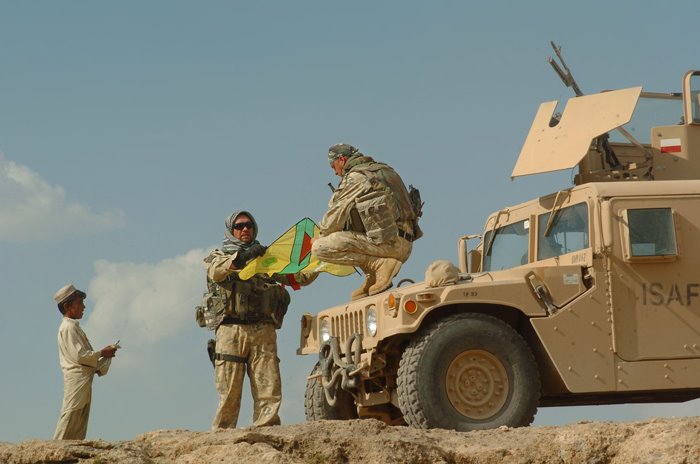
Polish troops serving with ISAF in Afghanistan have started distributing ISAF-logoed kites to poor children in Ghazni province.
'With big grins and excited chattering, the children jumped up and down shouting, "Patang! Patang!" (the Pashto word for kite.) Soon the sky had several of the yellow, green and red kites with International Security Assitance Forces logos flying, much to the delight of the children dancing around below.
"These kites are so much fun," said Mahmad-Amid Hahn, a 12-year- old boy, as he made whooping sounds while his kite dipped and swerved in the air. "The Taliban would never give us these things." For the children who had never seen a kite before, some of the Polish soldiers stepped in to assist, unfolding the kites and showing them how to take off with a running start to get it airborne.'
One has to wonder if the ISAF-flags won't be yet another magnet for Taliban forces looking to see who has colluded with foreign forces, that violence will provoke more visits by foreign troops... the cycle of accusations of collusion will continue.
'With big grins and excited chattering, the children jumped up and down shouting, "Patang! Patang!" (the Pashto word for kite.) Soon the sky had several of the yellow, green and red kites with International Security Assitance Forces logos flying, much to the delight of the children dancing around below.
"These kites are so much fun," said Mahmad-Amid Hahn, a 12-year- old boy, as he made whooping sounds while his kite dipped and swerved in the air. "The Taliban would never give us these things." For the children who had never seen a kite before, some of the Polish soldiers stepped in to assist, unfolding the kites and showing them how to take off with a running start to get it airborne.'
One has to wonder if the ISAF-flags won't be yet another magnet for Taliban forces looking to see who has colluded with foreign forces, that violence will provoke more visits by foreign troops... the cycle of accusations of collusion will continue.
Saturday, July 21, 2007
Iraq- Pentagon tries to learn from Madison Ave. Washington Post - MSNBC.com
'In the advertising world, brand identity is everything. Volvo means safety. Colgate means clean. IPod means cool. But since the U.S. military invaded Iraq in 2003, its "show of force" brand has proved to have limited appeal to Iraqi consumers, according to a recent study commissioned by the U.S. military.'
This is the observation of a Rand Corp report commissioned by the US Joint Forces Command. There seems to be some dry humor in the report, we particularly liked the 'We will help you' brand- wasn't that the underlying rhetoric back in 2003?:
'Helmus and his co-authors concluded that the "force" brand, which the United States peddled for the first few years of the occupation, was doomed from the start and has lost ground to enemies' competing brands. While not abandoning the more aggressive elements of warfare, the report suggested, a more attractive brand for the Iraqi people might have been "We will help you." That is what President Bush's new Iraq strategy is striving for as it focuses on establishing a protective U.S. troop presence in Baghdad neighborhoods, training Iraq's security forces, and encouraging the central and local governments to take the lead in making things better.'
This video must be part of the 'show of force' brand that apparently hasn't worked....
This is the observation of a Rand Corp report commissioned by the US Joint Forces Command. There seems to be some dry humor in the report, we particularly liked the 'We will help you' brand- wasn't that the underlying rhetoric back in 2003?:
'Helmus and his co-authors concluded that the "force" brand, which the United States peddled for the first few years of the occupation, was doomed from the start and has lost ground to enemies' competing brands. While not abandoning the more aggressive elements of warfare, the report suggested, a more attractive brand for the Iraqi people might have been "We will help you." That is what President Bush's new Iraq strategy is striving for as it focuses on establishing a protective U.S. troop presence in Baghdad neighborhoods, training Iraq's security forces, and encouraging the central and local governments to take the lead in making things better.'
This video must be part of the 'show of force' brand that apparently hasn't worked....
Friday, July 20, 2007
Afghanistan- Canadian CIMIC provides village medical outreach
Video report by Canadian Armed Forces Army News, profiling the 'village medical outreach' program of the Canadian Contingent in southern Afghanistan. While the report highlights the medical support being offered to Afghan women, the whole exercise looks like a heavily militarized operation. The soldiers interviewed confirm this view, explaining that they can do more- and presumably more effective- humanitarian operations since they have been obliged to add more robust force protection.
Sunday, July 08, 2007
AFRICOM Update
There's quite a bit being written about AFRICOM, including a few previous posts we've done (also here and here).
- The US Department of State website has a briefing by Ryan Heny, Principal Deputy Under Secretary of Defense for Policy. The transcript gives a good preamble to the raison d'etre of AFRICOM. ''When it comes to the security or the defense part of this, AFRICOM is not meant to fight wars. It is one that is based on building partnership capability and in the areas of security cooperation. The missions that AFRICOM will emphasize are those of humanitarian assistance, civic action, the professionalism of militaries, assistance in border security and maritime security, and again the area of security cooperation and response to natural disasters.' The proposed comand structure is presetned as being a sort of non-linear/de-centralized HQ with 'nodes' spread across Africa.
- The International Relations and Security Network (ISN) has an exhaustive overview of AFRICOM- 'Questioning AFRICOM's intentions'. The piece explains:
'The Pentagon reportedly plans to establish another dozen bases in the region; in Algeria, Senegal, Mali, Mauritania, Niger, Chad, Ghana, Morocco and Tunisia.
But for now, AFRICOM remains an orphan without an African home, with Algeria and Libya rejecting the idea outright, and Morocco being distinctly cool.
The Transition Team will be housed temporarily at the US Army's Kelley Barracks in Stuttgart-Mohringen, Germany until the issue can be resolved. AFRICOM initially will be a sub-unified command, subordinate to EUCOM, also based in Stuttgart, with a projected Initial Operational Capability (IOC) by October 2007. As the Defense Department continues to search for a suitable African host country, high among its concerns is providing for the safety and security of an estimated 500 American personnel and their families who will staff the command.'
- Commentary on a recent WSJ article by UFPPC.
- Also, keep an eye out in September for an upcoming book entitled, 'Beyond Humanitarianism: What You Need to Know About Africa and Why it Matters'. The book will be a compilatoin of recent work by the Council on Foreign Relations and Foreign Affairs.
- The US Department of State website has a briefing by Ryan Heny, Principal Deputy Under Secretary of Defense for Policy. The transcript gives a good preamble to the raison d'etre of AFRICOM. ''When it comes to the security or the defense part of this, AFRICOM is not meant to fight wars. It is one that is based on building partnership capability and in the areas of security cooperation. The missions that AFRICOM will emphasize are those of humanitarian assistance, civic action, the professionalism of militaries, assistance in border security and maritime security, and again the area of security cooperation and response to natural disasters.' The proposed comand structure is presetned as being a sort of non-linear/de-centralized HQ with 'nodes' spread across Africa.
- The International Relations and Security Network (ISN) has an exhaustive overview of AFRICOM- 'Questioning AFRICOM's intentions'. The piece explains:
'The Pentagon reportedly plans to establish another dozen bases in the region; in Algeria, Senegal, Mali, Mauritania, Niger, Chad, Ghana, Morocco and Tunisia.
But for now, AFRICOM remains an orphan without an African home, with Algeria and Libya rejecting the idea outright, and Morocco being distinctly cool.
The Transition Team will be housed temporarily at the US Army's Kelley Barracks in Stuttgart-Mohringen, Germany until the issue can be resolved. AFRICOM initially will be a sub-unified command, subordinate to EUCOM, also based in Stuttgart, with a projected Initial Operational Capability (IOC) by October 2007. As the Defense Department continues to search for a suitable African host country, high among its concerns is providing for the safety and security of an estimated 500 American personnel and their families who will staff the command.'
- Commentary on a recent WSJ article by UFPPC.
- Also, keep an eye out in September for an upcoming book entitled, 'Beyond Humanitarianism: What You Need to Know About Africa and Why it Matters'. The book will be a compilatoin of recent work by the Council on Foreign Relations and Foreign Affairs.
CIMIC in UN & African Peace Operations Resource: CIMIC in UN & African Peace Operations
The following is an excellent resource that I have been meaning to post for some time, available on the website of the African Centre for the Constructive Resolution of Dispotes (ACCORD):
'This CIMIC in UN & African Peace Operations Manual is a product of all the partners of the African Civil-Military Coordination (ACMC) Programme. It was jointly produced by: the Peace Support Training Center (PSTC)/ German Technical Cooperation (GTZ) Agency in Nairobi, Kenya; the Kofi Annan International Peacekeeping Training Center (KAIPTC) in Accra, Ghana; the South African National War College (SANWC); and ACCORD.
The ACMC Programme is funded by the Government of Finland. The German Government, through GTZ, supports the participation of the PSTC in the ACMC Programme.'
The manual is an excellent resource, including insructor tools, exercises, policy documents and videos (the bibliography alone is a good resource, includes descriptions of the videos). Further details on the manual, including contacts for the editor are found on the website.
'This CIMIC in UN & African Peace Operations Manual is a product of all the partners of the African Civil-Military Coordination (ACMC) Programme. It was jointly produced by: the Peace Support Training Center (PSTC)/ German Technical Cooperation (GTZ) Agency in Nairobi, Kenya; the Kofi Annan International Peacekeeping Training Center (KAIPTC) in Accra, Ghana; the South African National War College (SANWC); and ACCORD.
The ACMC Programme is funded by the Government of Finland. The German Government, through GTZ, supports the participation of the PSTC in the ACMC Programme.'
The manual is an excellent resource, including insructor tools, exercises, policy documents and videos (the bibliography alone is a good resource, includes descriptions of the videos). Further details on the manual, including contacts for the editor are found on the website.
Sunday, July 01, 2007
Kofi Annan Launches Global Humanitarian Forum
A formal announcement has finally been made concering the Global Humanitarian Forum, a new organization created by from UN Secretary General Kofi Annan with support from the Swiss Government. Based in Geneva, the Forum will help people in poor countries play a greater role in finding solutions to their developmental and humanitarian problems.
While the former SG is vague on precisely what the organization will do, he does provide one precise example of what they might do:
'For example, he says the United Nations and other members of the humanitarian community would not have been able to deal with natural disasters such as the Indian Ocean tsunami and the earthquake in Kashmir without the help of the military.
"If the military had not come in and provided heavy logistical support … many more people would have died as we would not have been able to get to them," said the former U.N. chief. "And, so the military have become important players in humanitarian relief. And, yet, when we get together to discuss humanitarian issues, they are not around, they are not at the table."
"I think we would want to bring them to the table to discuss with humanitarian actors how we could cooperate. And, from my own previous experience, I know it is not an easy relationship," he added.
Mr. Annan says he recognizes private aid groups are not comfortable working with the military. He says he hopes the Forum can improve this relationship.'
While the former SG is vague on precisely what the organization will do, he does provide one precise example of what they might do:
'For example, he says the United Nations and other members of the humanitarian community would not have been able to deal with natural disasters such as the Indian Ocean tsunami and the earthquake in Kashmir without the help of the military.
"If the military had not come in and provided heavy logistical support … many more people would have died as we would not have been able to get to them," said the former U.N. chief. "And, so the military have become important players in humanitarian relief. And, yet, when we get together to discuss humanitarian issues, they are not around, they are not at the table."
"I think we would want to bring them to the table to discuss with humanitarian actors how we could cooperate. And, from my own previous experience, I know it is not an easy relationship," he added.
Mr. Annan says he recognizes private aid groups are not comfortable working with the military. He says he hopes the Forum can improve this relationship.'
Friday, June 22, 2007
French military to transport hundreds of toys for refugees in Chad
On a Friday afternoon, all we can say is 'thank you, France' for giving us such a great article to post:
'A small party of officers and men from the army and air force arrived at Quai Branly Museum near the Eiffel Tower on Thursday and helped staff of the UN refugee agency and the museum to load 35 boxloads of toys onto two trucks for transportation to a military airport in Orleans.
The toys, including dolls, model cars, jigsaw puzzles, teddy bears and even a little bicycle, were contributed by French children under a programme run by UNHCR and the museum, which only opened a year ago. Many of the children were at the museum yesterday to send off the toys.
The precious cargo will be flown to the Chad capital, N'Djamena, aboard an air force transport plane on Monday. The toys will then be handed over to UNHCR staff for distribution in refugee camps to children from Sudan's Darfur region and the Central African Republic (CAR).'
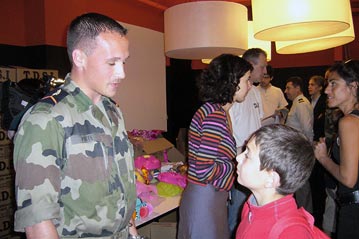
Despite telling a thousand words, the caption for the following photo read:
'A French soldier explains to a young boy how the toys he and his friends have donated will reach refugees in Chad.'
'A small party of officers and men from the army and air force arrived at Quai Branly Museum near the Eiffel Tower on Thursday and helped staff of the UN refugee agency and the museum to load 35 boxloads of toys onto two trucks for transportation to a military airport in Orleans.
The toys, including dolls, model cars, jigsaw puzzles, teddy bears and even a little bicycle, were contributed by French children under a programme run by UNHCR and the museum, which only opened a year ago. Many of the children were at the museum yesterday to send off the toys.
The precious cargo will be flown to the Chad capital, N'Djamena, aboard an air force transport plane on Monday. The toys will then be handed over to UNHCR staff for distribution in refugee camps to children from Sudan's Darfur region and the Central African Republic (CAR).'
Despite telling a thousand words, the caption for the following photo read:
'A French soldier explains to a young boy how the toys he and his friends have donated will reach refugees in Chad.'
Tuesday, June 19, 2007
Navy ship carries hope for the poor
Been a while since we had a post on military involvement in humanitarian activities- odd, considering the spate of such postings globally in the winter season. The USNS Comfort is steaming to the Caribbean and Latin America, with 800 teddy bears and staff (their statistics), on a 12 nation, four-month tour.
The mission of the Comfort was apparently decided by the Commander-in-Chief himself, notably to treat 85,000 people free of charge, and conduct 1,500 surgeries. While the lengthy article highlights the many great deeds that the hospital ship will conduct, it doesn't mention the practical training value that the ship and its 800 member crew will enjoy during their mission.
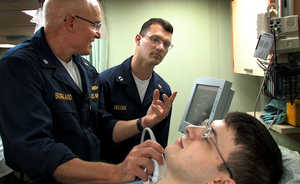
Update: more articles on the USS Comfort- also includes video footage.
The mission of the Comfort was apparently decided by the Commander-in-Chief himself, notably to treat 85,000 people free of charge, and conduct 1,500 surgeries. While the lengthy article highlights the many great deeds that the hospital ship will conduct, it doesn't mention the practical training value that the ship and its 800 member crew will enjoy during their mission.
Update: more articles on the USS Comfort- also includes video footage.
Subscribe to:
Posts (Atom)


